
 USD
USD GBP
GBP
 EUR
EUR



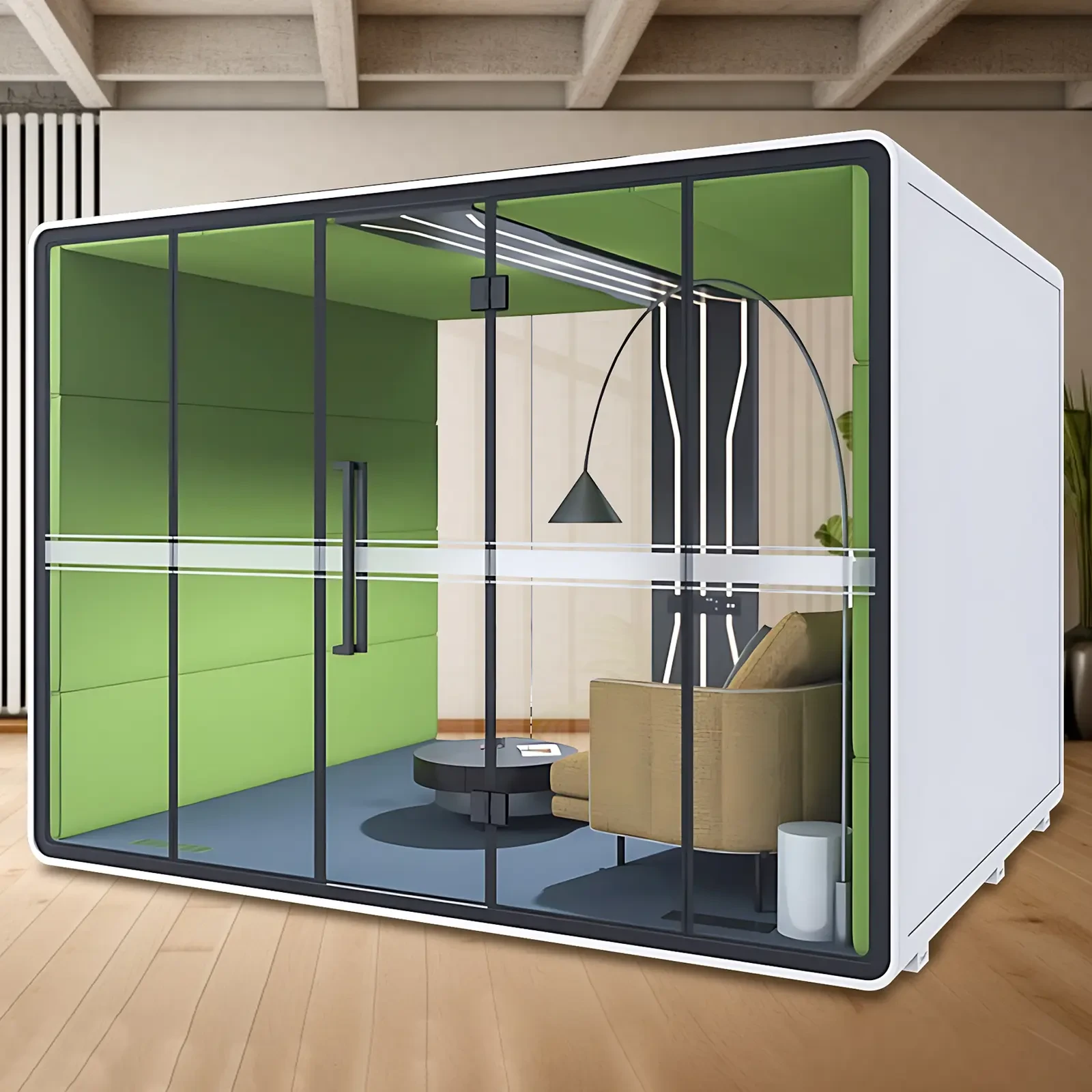
The soundproofing level for creating a home theater is indeed a very practical issue! There is no absolute standard of "must reach a certain number of decibels"; the key depends on your specific goals, budget, room conditions, and neighborly relations.
There are usually two core objectives:
1. Internally: Enhance your viewing/listening experience. Reduce external noise (such as traffic, neighbors, air conditioning) to allow you to hear richer details in the film at a lower volume.
2. Externally: Avoid disturbing others. Prevent explosions, subwoofer noises, conversations, etc., from movies from disturbing family members (other rooms) or neighbors (especially in apartments or townhouses).
The following are different sound insulation goals and their corresponding recommended measures, from basic to advanced:
Objective 1: Basic sound insulation (significantly reduces interference, high cost-effectiveness)
Target:
1. Significantly reduces conversations and medium-volume sounds transmitted to other rooms/neighbors.
2. Reduce external daily noise (such as conversations and television sounds) from interfering with the home theater.
3. Maintain a generally friendly relationship with your neighbors (to avoid frequent complaints), provided that the volume is kept within a certain range, especially with subwoofers and late at night.
Core measures (highly feasible DIY):
Door sealing: This is the weakest point! It must be addressed.
1. Replace with solid wood doors or specialized soundproof doors (best effect but most expensive).
2. Install automatic sealing strips/sound insulation strips at the bottom of the door.
High-quality soundproof sealing strips (such as E-type and D-type rubber strips) are added around the door frame.
If the door has a cavity, it can be filled with sound insulation cotton.
Window treatment:
If natural light is not needed, sealing it off is the most effective method (filling it with thick wooden boards and soundproofing materials, or building a wall).
Keep the window:
Replacing your windows with professional ventilated and soundproof windows can solve the problems of traditional soundproof windows not providing sound insulation when open and not providing ventilation when closed. For more details on ventilated and soundproof windows, please visit my homepage to read related articles! (Laminated glass offers better sound insulation, especially for low frequencies).
Install heavy soundproof curtains (multi-layered curtains with soundproofing felt are preferred).
Add soundproof sealing strips to the gaps in the window frame.
Sealing gaps in walls/ceilings/floors:
Carefully inspect all pipes that pass through the wall (air conditioning pipes, electrical conduits), socket boxes, light fixture openings, and gaps between the baseboard and the wall/floor.
Use sound-absorbing sealant/foam to completely seal these gaps. This is the most cost-effective and efficient basic step!
Internal sound absorption treatment (improves sound quality and indirectly assists in sound insulation):
Lay thick carpets and high-quality sound insulation and vibration damping pads (very important to reduce footsteps and low frequencies transmitted through the floor).
Install sound-absorbing/diffusing panels at the main reflection points (first reflection point on the side wall, rear wall, and ceiling). This mainly improves indoor acoustics, reduces standing waves and reverberation, making the sound clearer, while also absorbing some sound energy and slightly reducing the energy transmitted outdoors.
Objective 2: Moderate sound insulation (effective control of the subwoofer, resulting in a quieter environment)
Target:
Significantly suppresses the propagation of low-frequency energy from the subwoofer (this is the most difficult part to block and the easiest to annoy the neighbors).
Significantly reduce the volume of movie sound effects transmitted outdoors.
It effectively blocks most of the external mid-to-high frequency noise.
At a reasonable volume (not extreme volume), there is basically no need to worry about disturbing family members and neighbors.
Add measures to basic sound insulation:
Wall treatment:
Adding a layer of light steel keel partition wall: This involves adding a layer to the existing wall, filling the spaces between the keels with high-density sound insulation cotton (such as rock wool or polyester fiber cotton), and then sealing it with sound-insulating gypsum board or damping sound insulation board (such as calcium silicate board + sound insulation felt). This is a relatively cost-effective wall sound insulation upgrade solution.
Use flexible dampers/soundproof hooks to connect the new keel to the original wall/floor slab, cutting off the rigid connection (very important, to reduce structural sound transmission).
Ceiling treatment:
Similar to walls, suspended soundproof ceilings (light steel keel + sound insulation cotton + sound insulation board + elastic hooks).
Ground preparation:
Lay professional sound insulation and vibration damping pads (such as rubber pads or polyurethane pads) on the existing ground.
Then, a floating floor (such as wooden joists + shock-absorbing pads + flooring, or directly lay composite flooring/carpet) is laid on top.
Subwoofer processing:
Use a subwoofer soundproofing pad/base (a special product with shock-absorbing springs or rubber).
Placing the subwoofer at an acoustically optimized location (such as a corner) can sometimes reduce room resonance and lower the energy transmitted to the structure (but this requires actual testing).
Consider a dual subwoofer strategy to achieve uniform low frequencies even at lower volumes, reducing the need for a single subwoofer to be turned up too loud.
Upgrade doors and windows:
Ensure that doors and windows meet at least the higher level of basic sound insulation (solid soundproof doors, double/triple soundproof windows).
Objective 3: Professional-grade/high-requirement soundproofing (approaching the effect of a commercial cinema, extremely quiet)
Target:
Even when playing movies at extremely high volumes (close to reference levels), only very faint sounds (mainly extremely low-frequency vibrations) can be heard outdoors or in adjacent rooms.
The outside world is almost completely isolated (e.g., traffic noise from the street).
It requires a very high level of investment and professional construction.
Additional measures should be taken to improve moderate sound insulation:
"Room within a room" structure: This is the most effective but also the most expensive and space-consuming method. A completely suspended room (including walls, ceiling, and floor) is built inside the original building structure and isolated from it by elastic elements.
Multiple sound insulation layers: The walls/ceilings use multiple layers of sound insulation boards of different materials (such as gypsum board + sound insulation felt + calcium silicate board + sound insulation felt + gypsum board), with sound insulation cotton of different densities filling the middle, forming a mass-spring-mass system.
Ultimate airtightness: The sealing requirements for all gaps are almost demanding.
Professional soundproof doors and windows: Using laboratory-grade soundproof door and window systems.
Special treatment for HVAC systems: Ventilation ducts need to be equipped with silencers and soundproofed wrapping, and the air outlet design should avoid straight-through.
Structural vibration reduction: Vibration reduction treatment is also applied to the equipment (amplifier, player).
Summary and recommendations:
1. Sealing is fundamental! No matter how expensive the soundproofing materials, their effectiveness will be greatly reduced if the gaps in doors and windows aren't properly sealed. Prioritize spending a small amount of money to properly seal all gaps!
2. Doors are a critical weak point! A soundproof door can ruin all other efforts. It's crucial to address this issue thoroughly.
3. Subwoofers are the biggest challenge to neighborly relations! The low-frequency energy they produce is the hardest to isolate and travels the farthest. Make sure to properly address the subwoofer's vibration damping (pad/base) and placement. Controlling the subwoofer's volume is a practical way to avoid complaints.
4. Sound insulation ≠ sound absorption: Sound insulation blocks sound transmission (prevents sound from entering/exiting), while sound absorption improves the indoor acoustic environment (reduces reflections and reverberation). Both are necessary, but their purposes and methods differ. After basic sound insulation is done well, indoor sound absorption can further improve sound quality.
5. The Law of Mass and Flexible Connections: Sound insulation is directly proportional to mass (density). However, rigid connections allow vibrations (structural sound transmission) to be easily transmitted. Disconnecting rigid connections (using flexible hangers/shock absorbers) is more important than simply increasing mass!
6. Testing and Neighbor Communication: Before/after construction, use a decibel meter app on your phone (though not perfectly accurate, it's still a useful reference) or have a friend listen outdoors/in your neighbor's house, playing movie clips with strong bass to test the sound. Communicating your plans with your neighbors beforehand, understanding their schedules, and agreeing on reasonable viewing times and volume can greatly reduce potential conflicts.
7. Budget determines depth:
Basic version (recommended for everyone): Seal gaps + door bottom sealing strip + door frame sealing strip + thick carpet/vibration damping pad + thick curtains + basic sound-absorbing panels. Cost-effective with significantly improved results.
Medium-range version (for better results): Basic version + soundproof walls/ceilings (light steel keel + sound insulation cotton + sound insulation board + flexible connection) + upgraded doors and windows + subwoofer sound insulation pad. Higher investment, more comprehensive results.
Professional version (for audiophiles/special requirements): Considers rooms within rooms, complex multi-layered structures, professional soundproof doors and windows, and soundproofing and ventilation systems. Requires a huge investment and occupies a large amount of space.
in conclusion
For most home users, the target is a "medium sound insulation" level. This typically means:
Repair all gaps (especially doors, windows, and holes through walls).
Install a well-sealed solid door or a soundproof door.
Take effective measures to protect the windows (at least use thick curtains and weatherstripping, and it's best to upgrade the glass).
Perform appropriate soundproofing modifications to the walls/ceilings (such as light steel keel + sound insulation cotton + sound insulation board).
The floor is covered with carpet and sound-absorbing and vibration-damping pads.
Ensure proper indoor sound absorption.
Add soundproofing pads to the subwoofer.
At this level, as long as you don't drive it horribly at night (especially with a subwoofer), you can usually effectively control sound leakage, creating an immersive and minimally disruptive home theater environment, while also maintaining harmonious neighborly relations. Remember, perfect soundproofing is almost impossible, but significant improvement is entirely feasible and worth the investment! When you're enjoying the immersive sound of Dune late at night, your neighbors can also sleep peacefully – that's a win-win situation.